Justin Valliere & Jennifer Funk look at trade-offs most plants make in allocating resources and find that really successful weeds “escape” from these rules. A framework for better weed management & spotting future problems.
Doctoral student Marco Castaneda Martinez won the inaugural Betsey Landis Award from the California Native Plant Society, including a $1,500 grant, for research on purple needlegrass, California's state grass.
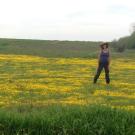
Wildflowers such as poppies and lupine mix strategies to survive drought: some risky and others conservative, both above-ground and below. Research from the lab of Jennifer Funk of the UC Davis Department of Plant Sciences.
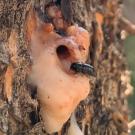
Researchers in the Andrew Latimer lab at the UC Davis Department of Plant Sciences are creating a model to predict when pine cone seeds will ripen, aiding efforts to reforest areas scorched by wildfire.
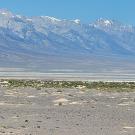
Is dust inevitable in southeastern California’s Owens Valley? A new federal report says “no,” supported by work from Valerie Eviner, a professor in the Department of Plant Sciences. Native plants and better water management offer help, amid warming weather that will make air dustier for valley residents.
Two UC Davis graduate students, Jennifer Cribbs and Nina Venuti, received nearly $100K each from CalFire to support forest restoration. Their research on tree resilience and seed collection aims to aid reforestation and ecosystem management in California.
Air pollution and invasive weeds threaten fire-adapted wildflowers in the Santa Monica Mountains. Nitrogen from smog boosts invaders, reducing native seed banks and long-term biodiversity after wildfire recovery.
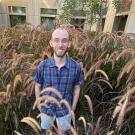
New UC Cooperative Extension specialist Justin Valliere will expand invasion and restoration ecology efforts, focusing on native plant recovery, climate stress, and community engagement—especially involving youth in stewardship.
A study by UC Davis researchers found that reintroducing cattle grazing to vernal pools after 40 years of rest increased plant diversity. The cattle’s hoofprints create microdepressions that help native species thrive in these ecosystems.
A new NAS report finds innovative approaches for dust control are needed at Owens Lake, California, to improve air quality, reduce water use, and preserve habitats. Professor Valerie Eviner, Plant Sciences, UC Davis, serves on the Owens Lake Scientific Advisory Panel (OLSAP) to assess how to manage Owens Lake.