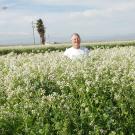
Cover crops provide a variety of benefits. Keeping living plants in the soil year-round improves soil structure and nutrients, stimulates soil organisms and provides homes and food for pollinators and helpful insects such as ladybugs.
First-of-its-kind research on the impact of California's resurgent population of protected gray wolves shows rising predation and costs to cattle ranchers. It underscores the need to move “toward some kind of coexistence,” rangelands specialist Ken Tate says.
UC researchers spent 20 years studying conservation agriculture in California, testing no-till, cover cropping, and residue management. Their findings show long-term benefits for soil health, water retention, and crop resilience, guiding future farming.
A new NAS report finds innovative approaches for dust control are needed at Owens Lake, California, to improve air quality, reduce water use, and preserve habitats. Professor Valerie Eviner, Plant Sciences, UC Davis, serves on the Owens Lake Scientific Advisory Panel (OLSAP) to assess how to manage Owens Lake.