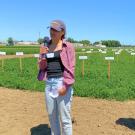
Astrid Volder and Rachel Noon are collecting all kinds of data from both young and mature almond rootstocks to build a model for below-ground management. Their work is getting international attention.
By winning a scholarship to attend an ag industry conference, doctoral student Oluwatosin Adebanjo accessed holistic resources to help him become a leader in the ag sector.
Ph.D. candidate Matthew Davis and team in the lab of Grey Monroe found lab-based tissue culture leads to more somatic mutations and suggest ways to avoid this widespread problem in research settings.
Arnold Bloom proposes a newly identified “Bloom cycle” within photorespiration, offering new insights for breeding crop plants that are productive, nutritious and resist pests amid warming temperatures.
Four emerging scientists connected to the Department of Plant Sciences -- Forrest Li, Michele Nalle, Cree King and Jonathan Berlingeri -- have been named Borlaug Scholars for 2025 by the National Association for Plant Breeding.
The inaugural Global Food Systems Research Day, held Oct. 24 at UC Davis, underscored the role of scientists in the UC Davis Department of Plant Sciences in the effort to build sustainable agricultural and distribution systems providing nutritious and affordable food to people all over the world.
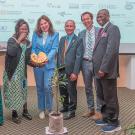
At a Kenya event, the African Orphan Crops Consortium planted a jackfruit tree to symbolize food security and peace. UC Davis' Allen Van Deynze and partners are breeding resilient orphan crops to help small farmers combat climate change and hunger.
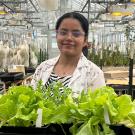
UC Davis doctoral student Samjhana Khanal received a $50,000 Schlumberger Foundation grant for her research on disease-resistant lettuce using CRISPR. Her work aims to reduce crop losses and support sustainable agriculture, including in Nepal.