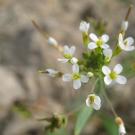
UC Davis researchers, in collaboration with the Max Planck Institute, discovered that DNA mutations in plants are not random but follow a non-random pattern that benefits the plant. This finding challenges existing mutation theories and could aid in crop breeding and disease prevention.
Climate change creates hotter weather and drier seasons – and new challenges for farmers. With excessive heat damaging seed quality, seed producers and growers increasingly need uniform and productive crops with thermotolerance.
Josh Hegarty, a postdoctoral researcher in the Dubcovsky Lab in the Department of Plant Sciences at the University of California, Davis, is leading a project to develop commercial varieties of triticale for forage and feed. The National Institute of Food and Agriculture, or NIFA, is granting a $300,000 investment as part of its Agriculture and Food Research Initiative.
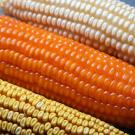
Christine Diepenbrock, an assistant professor in the Department of Plant Sciences, and several researchers from Cornell, Michigan State, Purdue, and North Carolina State Universities have collaborated to identify and thoroughly dissect 11 genes underpinning natural variation in levels of carotenoids, including those with provitamin A activity, in maize kernels.
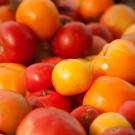
Two new varieties from the Public Strawberry Breeding Program at the University of California, Davis, will provide consumers with big, flavorful strawberries throughout fall and winter, too.
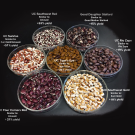
The Department of Plant Sciences has released six new varieties of organic dry beans which are higher yielding, and are resistant to bean common mosaic virus (BCMV), a disease that prevents bean plants from maturing promptly and uniformly.
Plant scientists and wheat breeders now have a new tool to develop more nutritious and productive wheat varieties: A public online database of 10 million mutations in wheat genes. Scientists at UC Davis and three institutions in the UK created the database, which will allow scientists worldwide to study the function of every gene of wheat.
Sometimes, the evolutionary history of a species can be found in a fossil record. Other times, DNA and genetic fingerprints replace rocks and imprints. That is the case for the carrot, the richest crop source of vitamin A in the American diet, whose full genetic code has been deciphered by a team led by the University of Wisconsin-Madison in collaboration with the University of California, Davis.