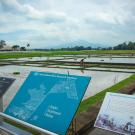
A UC Davis study found that while breeding and management helped maintain rice yields despite climate change, they weren't enough to boost production to meet growing global demand. Increased investment in breeding and soil management is crucial.
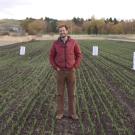
UC Davis and UC Cooperative Extension introduced new tools for optimizing nitrogen fertilizer use in wheat and small grains. These tools improve crop productivity, save fertilizer costs, and reduce environmental impact.
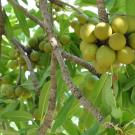
UC Davis contributed to the decoding of the shea tree genome, aiding in breeding efforts to boost production of this vital African crop. The breakthrough could enhance farmers' productivity, especially women, and improve economic returns.
The U.S. Agency for International Development is investing up to $34.5 million to support UC Davis' Horticulture Innovation Lab. The program aims to improve fruit and vegetable production, handling, and consumption for global nutritional and financial security.
UC Davis researchers are developing three Pima cotton cultivars with improved resistance to Fusarium wilt, a disease that devastates crops. This breakthrough could help stabilize cotton production and prevent higher product costs.
The newest greenhouse on campus doesn’t look like a greenhouse at all. It’s a 40-foot-long shipping container filled with cutting-edge, high-tech equipment that will help UC Davis usher in a new frontier in hydroponic agriculture.
Two new varieties from the Public Strawberry Breeding Program at the University of California, Davis, will provide consumers with big, flavorful strawberries throughout fall and winter, too.
The Foundation for Food & Agriculture Research, or FFAR, has awarded a Seeding Solutions grant to the University of California, Davis to study how the microbial community hosted by the Sierra Mixe corn variety provides atmospheric nitrogen to the plant. Seeding Solutions grants are awarded annually in six different challenge groups recognized by the FFAR, with this one falling under “Next Generation Crops.” The grant was matched by Benson Hill for a total investment of $1,855,162
Troy Magney, Dept. of Plant Sciences, is using methods such as hyperspectral imaging – a remote sensing technique – to measure plant water stress, nutrient status, biomass, and photosynthesis in order to make informed decisions about water and fertilizer management. This is important for global agriculture in the future.
Mars Wrigley, a segment of Mars, Inc., held a ribbon-cutting ceremony at its new research facility in Davis, California. The facility will continue the research partnership between Mars and UC Davis, addressing critical plant science issues such as plant genetics, global sustainability, climate change, and crop disease control.