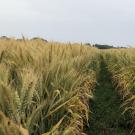
UC Davis researchers discovered that duplicating certain genes in wheat can stimulate deeper root growth, helping plants access water in drought conditions. This breakthrough could lead to higher yields and better drought resistance in wheat.
UC Davis researchers presented their rice studies at the 39th Rice Technical Working Group conference in Arkansas. Topics included herbicide programs, weedy rice responses, and the behavior of rice under different treatments, highlighting California's rice research.
Nearly 40 high school students participated in a UC Davis Biotechnology Program class, testing potato genes that enhance cold storage. The hands-on experience exposed them to biotechnology and college life, fostering interest in careers and studies at UC Davis.
Ten UC Davis students and postdoctoral researchers recently attended the annual Vegetable and Flower Conference of the American Seed Trade Association.
Farmers in Panama are sharing sustainable cattle grazing techniques with peers through Yale’s ELTI program. UC Davis graduate Marina Vergara studied this participatory model, highlighting farmer-to-farmer knowledge exchange, which could influence future extension programs.
G. David Miller, founder and director of the UC Davis Global Fellowships in Agricultural Development program and a collaborator in the Horticulture Innovation Lab, died Dec. 1, 2022, in Davis.
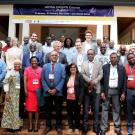
Top plant scientists from across Africa are undergoing training in gene editing for crops through the UC Davis African Plant Breeding Academy. The course, focusing on CRISPR technology, aims to enhance crop adaptation to climate change and improve nutrition.
Maeli Melotto, a professor in the UC Davis Department of Plant Sciences specializing in plant immunity, has been recognized as a fellow of the American Association for the Advancement of Science, the world’s largest general scientific society and publisher of the Science family of journals.
Twelve UC Davis graduate students traveled the globe in the summer of 2022, creating short films to showcase their ecology research. The films presented at the Ecology Film Festival highlight the importance of storytelling in making science accessible.
The nonprofit organization Pacific Horticulture has released a new video describing research to develop irrigation recommendations for landscape plants, the science behind the process, and early ideas for mindful gardeners and landscapers.
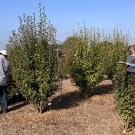
Lorence Oki's research on water-efficient roses reveals cultivars that stay aesthetically pleasing with minimal irrigation. His trials, part of the Climate-Ready Landscape Plants project, help develop low-water options for sustainable landscaping.
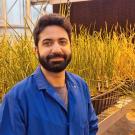
Imtiyaz Khanday, an assistant professor in the UC Davis Department of Plant Sciences, is co-leading an international team that has propagated a commercial hybrid rice strain as a clone through seeds with 95 percent efficiency. The method that led to this breakthrough could lower the cost of hybrid rice seed, making high-yielding, disease-resistant rice strains available to low-income farmers worldwide.
Louise Ferguson and fellow editors published The Fig: Botany, Production and Uses, a comprehensive book on fig cultivation, history, and market growth. It covers everything from fig varieties to postharvest techniques, boosting sector growth.
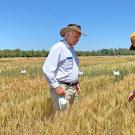
Jorge Dubcovsky of UC Davis was awarded the Frank N. Meyer Medal for his pioneering work on wheat genetics, including the development of germplasm and wheat varieties that improve yield, nutrition, and climate resilience.
Isha Poudel, a UC Davis master's student in international agricultural development, has received an American Association of University Women fellowship. Her research focuses on gender equity and disaster resiliency in food systems.