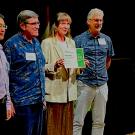
Doctoral student Marie Klein won best elevator talk at a national bioenergy meeting for her work on drought-tolerant poplars grown for jet fuel—part of a DOE effort to cut fossil fuels and greenhouse gases by 2050.
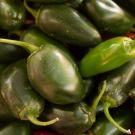
UC Davis scientists received $2.1M in USDA grants to breed green beans, chile peppers, and alfalfa better suited for heat and drought. The goal: improve quality, boost yield, cut costs, and adapt crops to climate change.
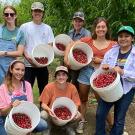
UC Davis students harvest surplus fruit from campus orchards through Fresh Focus, turning what would go to waste into fresh produce for food-insecure peers. In 2022, over 12,800 pounds were donated to student support programs.
Venkatesan Sundaresan, a UC Davis expert in rice reproduction and microbiomes, has been elected to the National Academy of Sciences for groundbreaking research on clonal seeds and drought-tolerant crops.
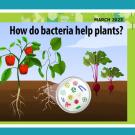
UC Davis named Eduardo Blumwald a 2023 Innovator of the Year for his team’s gene-editing discovery that reduces fertilizer use in cereal crops like rice by enhancing nitrogen-fixing bacteria—cutting costs and pollution globally.
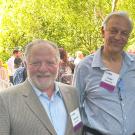
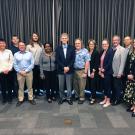
UC Davis welcomed U.S. Special Envoy Cary Fowler to explore partnerships for global food security. Discussions centered on soil health, climate resilience, and indigenous crops, highlighting UC’s role in shaping VACS.
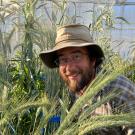
UC Davis’ Joshua Hegarty received an $800K USDA grant to breed triticale with better bread-baking qualities while maintaining high yields and low input needs, aiming to boost food security and value for farmers worldwide.
Gail Taylor is co-authoring a 2026 U.N. report offering solutions for global sustainability by 2050. The report tackles climate, biodiversity, and pollution, aiming to guide nations toward a more sustainable future.
UC Davis and La Salle University in Colombia won a federal grant to create the “Cacao Innovation Rural Youth Lab,” helping underrepresented students explore cacao farming, sustainability, and global trade through hands-on learning.
Catelyn Bridges, a Ph.D. student and mother, received the UC Davis Plant Sciences GSR/DEI award to support her cannabis research and efforts to uplift underrepresented farmers. The award eases financial strain and advances equity in science.
Doctoral student Anca Barcu received a DEI-focused GSR award to study dry-farmed tomatoes that could help low-resource growers. Her work is inspired by her Romanian roots, community leadership, and desire to build a better future.
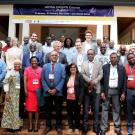
UC Davis received $2M to train 80 African scientists in CRISPR gene editing, helping develop resilient, nutritious regional crops. The program strengthens food security, local capacity, and global crop development.
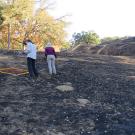
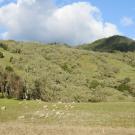
Researchers from UC Davis used the 2018 River Fire as a rare chance to study wildfire effects on soil, plants, and grazing lands. Their data are now helping others assess livestock impacts and track post-fire drought recovery.
Post-wildfire grazing didn’t significantly raise toxic metals in lamb meat or wool, a UC Davis study found—reassuring news for food safety. Researchers call for continued monitoring as wildfires reshape grazing landscapes.
UC Davis scientist Eduardo Blumwald partnered with Science Journal for Kids and Teens to adapt his rice-bacteria research for high school classrooms, helping boost science literacy. His paper is now reaching students and teachers nationwide.